How Our Bees Fared in 2025 (and How Much Honey We Harvested!)
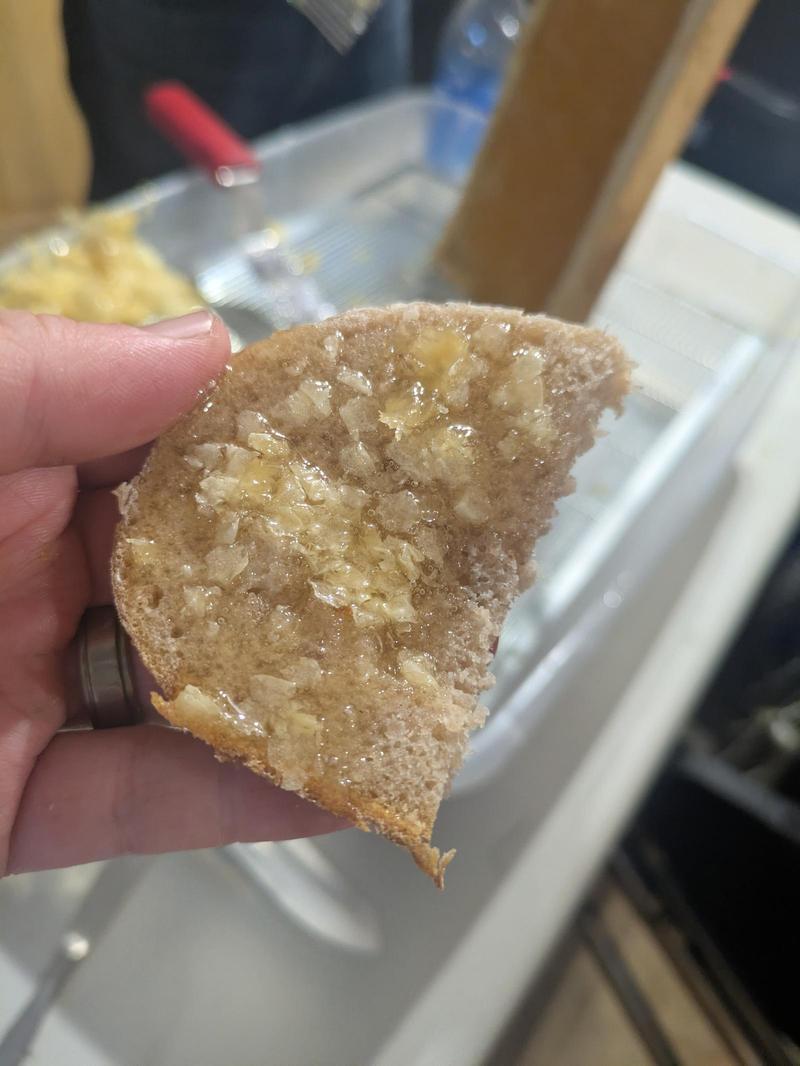
There is nothing quite like a golden spoonful of honey, right from the comb, spread onto warm sourdough bread.
It's one of the main reasons we keep bees!
Where we started this year
As a quick recap, we ended the fall of 2024 with zero hives. It was pretty disappointing! Fortunately, we did get honey, because the bees stayed until fall. But then, after our final honey harvest, our bees absconded.
Read about our bee journey so far:
- Our hive setup
- Our first honey harvest
- Year 1: Winterizing the bees
- Spring: How Year 2 Started
- Year 2: Splitting Hives, Harvesting Honey
Bees can abscond for numerous reasons, if they don't like something about the conditions of their hive. Our best guess is that the mite load was high, and we were slow to treat. We also may have been too slow getting the screened bottom boards out at the end of summer, so the hive could have been a little drafty in the fall as it started to cool off. Another option was that the hives were too full - we had queen excluders on each keeping the queen and her brood in the bottom three supers. The hives we harvested from were strong… too strong? A queen might decide to leave if she ran out of space to lay eggs.
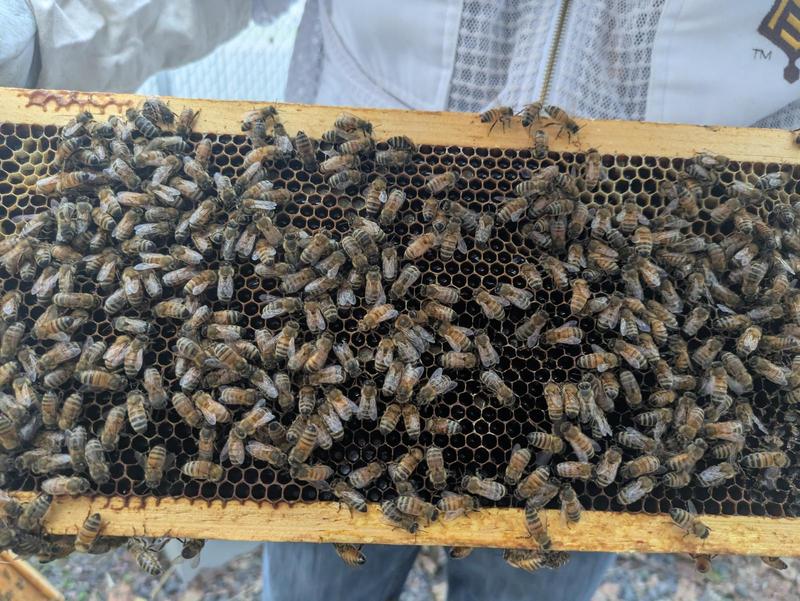
Regardless, we will never know exactly why these bees left. But that's where we were at. Zero hives! But we weren't entirely starting from scratch, because we had all the frames full of built out comb from the previous years hives. It takes a lot of work for bees to build wax; already having frames covered in wax comb is a huge headstart for a new hive. They can put more energy into making honey right away!
Installing new bees
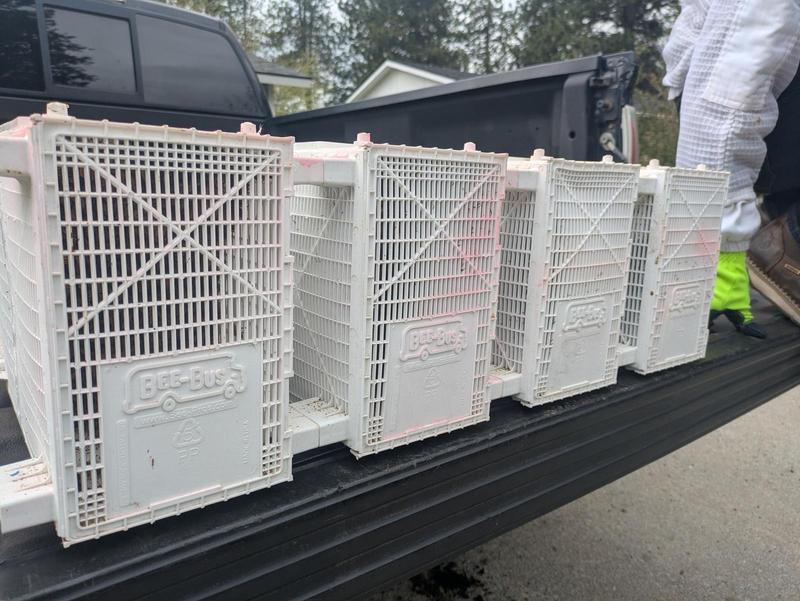
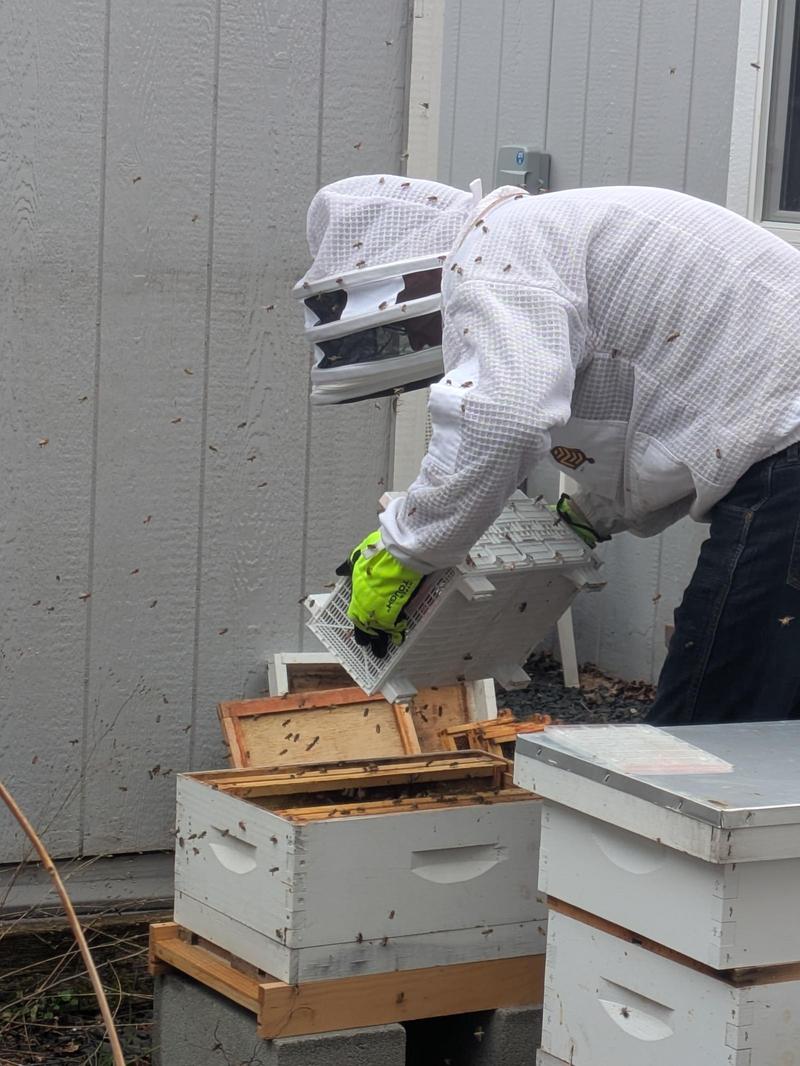
On April 19, we got our new bees. Randy picked up four nucs from a local store (we had pre-ordered them). It had rained that morning. The sun came out as he installed the new bees in our four hives.
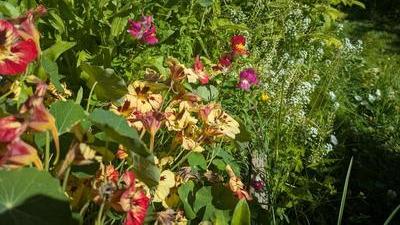
We gave each hive a jar of sugar water and a pollen patty to give them a boost. In our area, flowers had recently started blooming: our maple, the Oregon grape, daffodils and tulips, one of our plum trees, dandelions. The crabapple trees looked ready to pop any day.
Into summer
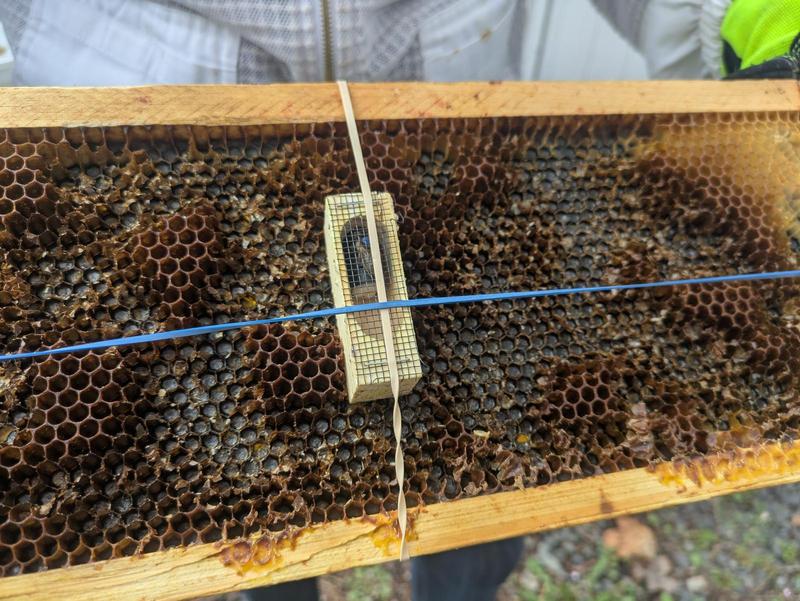
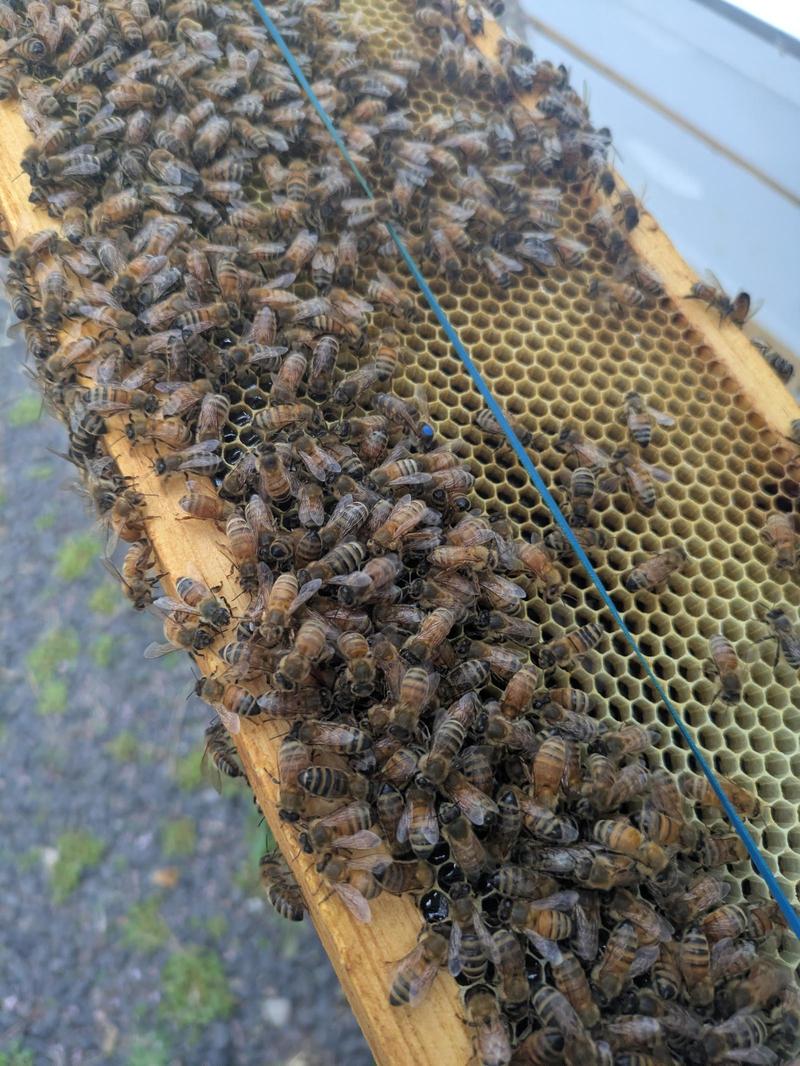
As the months grew hot, the bees collected pollen and nectar. Of the four new hives, one in particular was fantastic. That queen was a keeper! Of the other three, one did okay, not amazing but not bad, and the other two declined over the late spring, with at least one of their queens leaving or dying. We took a few frames of brood and nurse bees from the great hive to give the dying hives a boost and a chance at re-queening. Both came back, but not strong enough to produce a ton of honey. Our growing season is pretty short all things considered.
Honey harvest
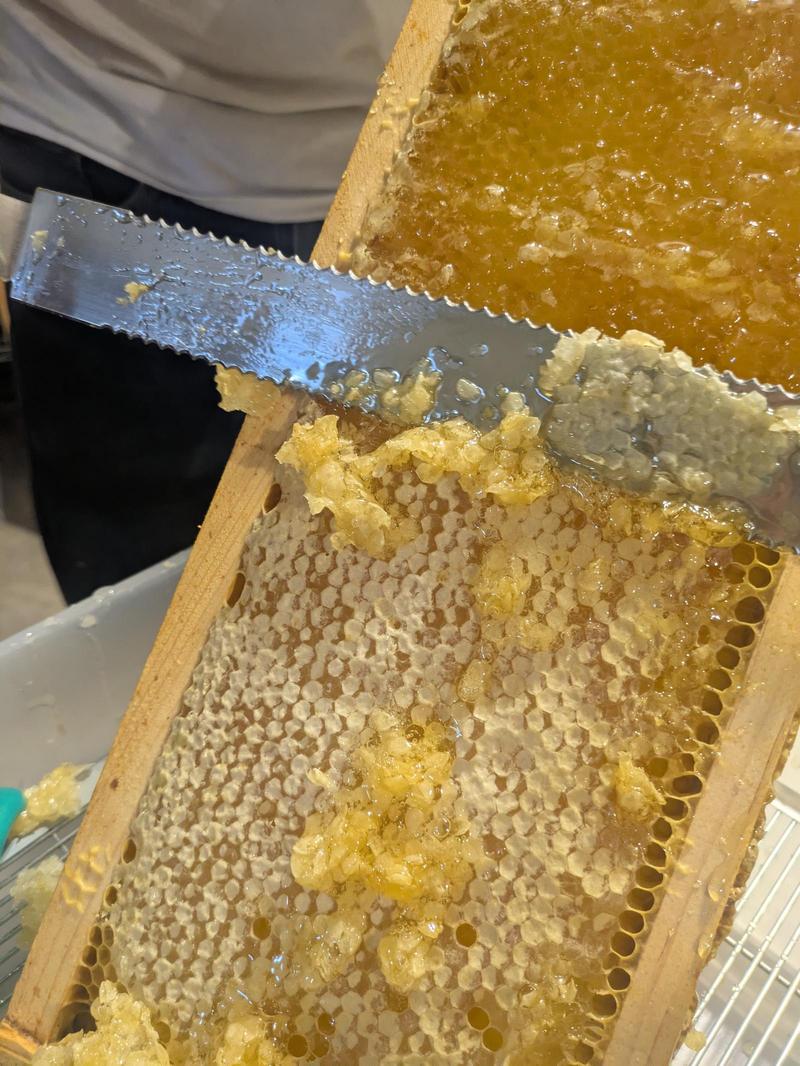
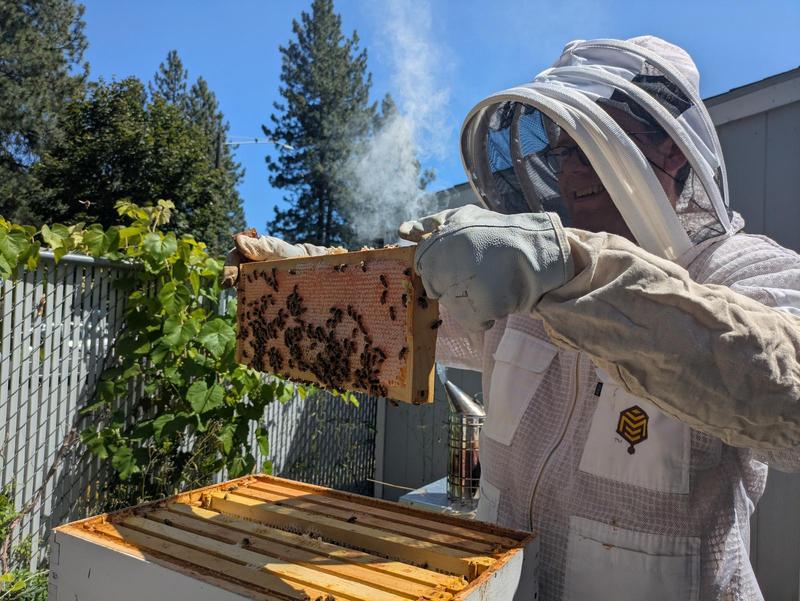
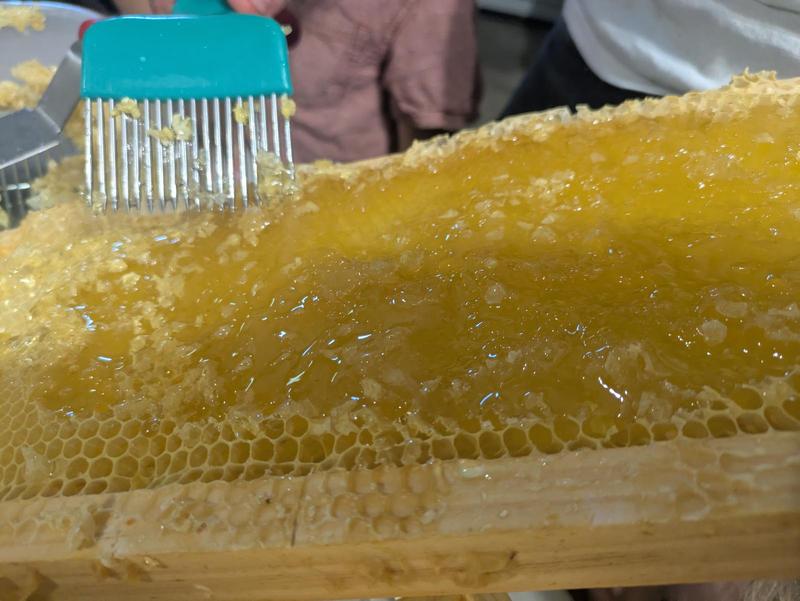
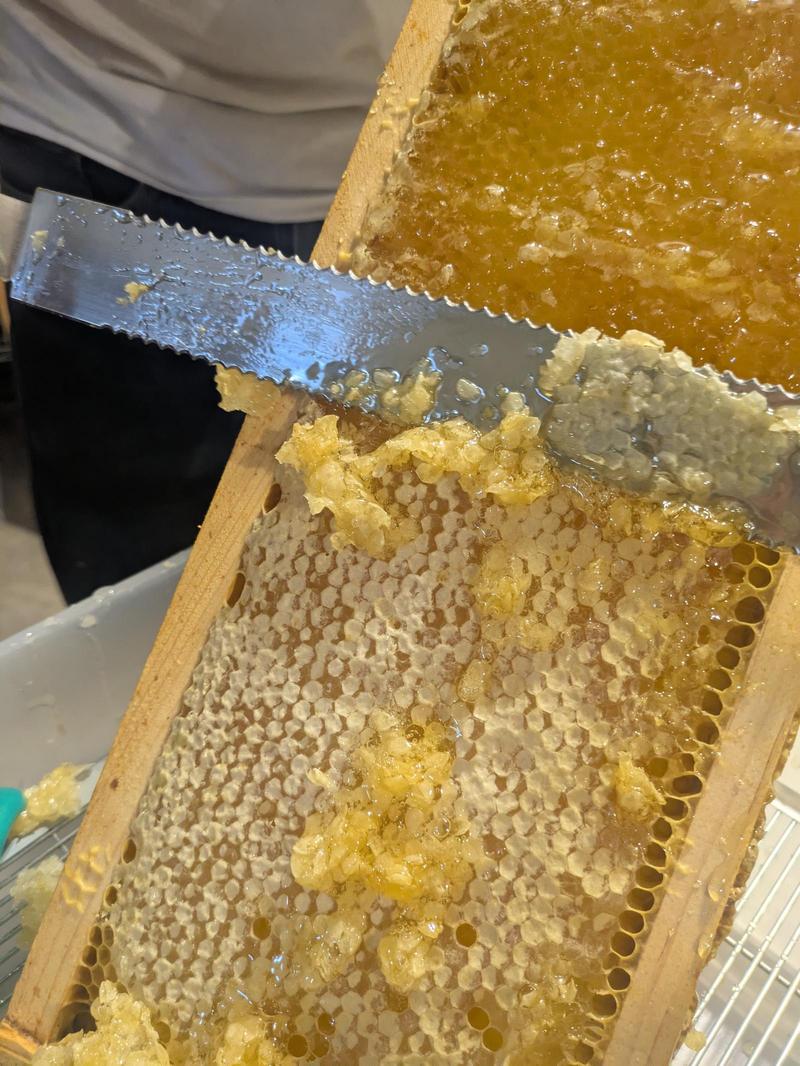
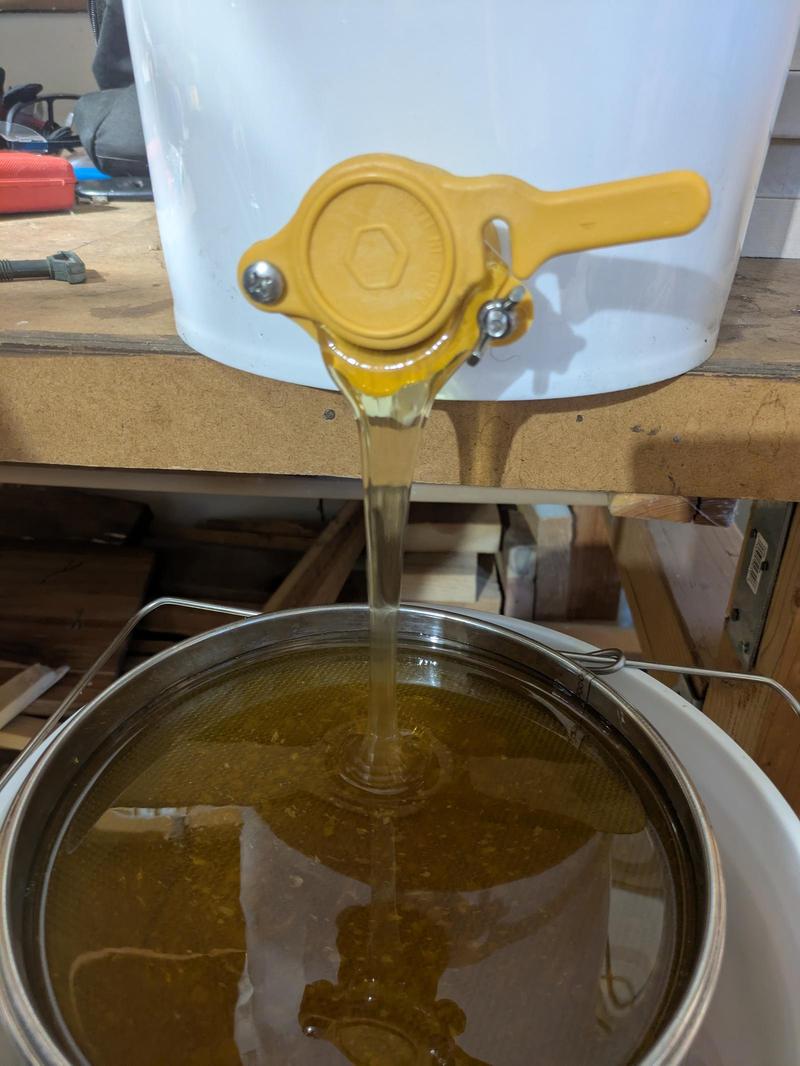
On the last day of August, we harvested honey. We pulled 4 supers from the fantastic hive, and a few frames from the other hives. Like always, we only harvest the extra honey, leaving plenty for the bees for winter. Two of the hives still looked weaker, and one had no evidence of a queen, so Randy merged them together.
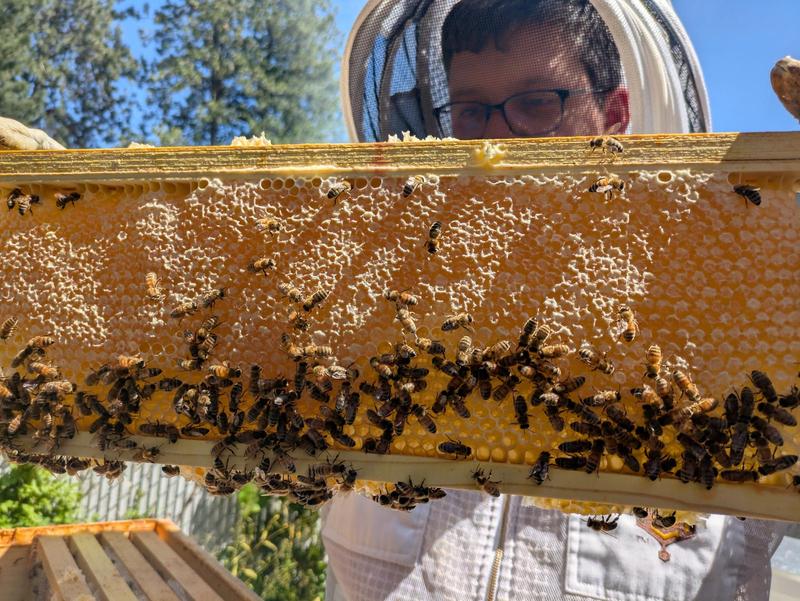
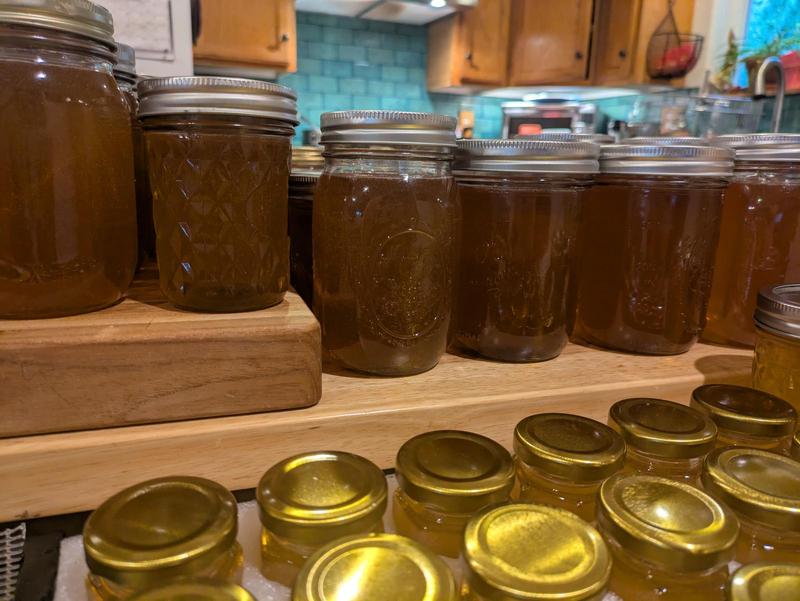
We got about 12 gallons of honey! We also had six foundationless frames with beautiful comb. Most frames have a plastic sheet in the middle to get the bees something to build off of, a starting place. The foundationless frames don't have that, so the bees have to build everything. This is what you do if you want great big chunks of honeycomb to eat or share!
Going into fall
By October, we only had one hive. This was disappointing! One absconded for unknown reasons; one died for unknown reasons (we found a dead queen even); one is ready to brave the winter. Clearly we need to work on our fall beekeeping. Same speculations as last year… Being an LINK election year, Randy was busy, and we probably should have checked on the bees more often in the early fall. Though, for some of it, I really don't know how much we can do. If the bees want to abscond, they're going to abscond.
On the bright side, since some bees left, we were able to harvest extra honey, since the bees weren't going to need it for the winter. We harvested another 5 gallons, bringing our yearly total to about 17 gallons, plus the frames of honeycomb. Not bad! Now we're just hoping our remaining hive makes it through the winter! We will see come spring…!
Why Have a Big Family? Weighing Opportunity Costs and How to Make it Easier